
First Flight
The Kryptonite that ended Superman's first adventure

What you’re about to read comes from a larger chapter in a book series -- specifically, the chapter Warnerboros and the book Rebooted: The many deaths of DC. This bit will focus on how DC and WB have been screwing over Superman movies since the 1970s.
Part 1 - First Flight
Here’s a story for you: A Superman director shows up and makes a commercially successful film about the Man of Steel. Critics and fans complain that this movie is too mature and contains too many religious allegories, particularly Judeo-Christian imagery. These offended people start sending angry messages and death threats to the individuals who made the film. As a response, the studio begins to doubt the director’s plan despite their fiscal success and starts catering to this vocal negativity. That shift leads to heavy recutting of the director’s second movie before its theatrical release, and the director’s utter removal from the DC brand before the third. In the ensuing sequels, the company chases a lighter tone to please audiences, which leads to smaller financial returns with each installment. Eventually, the actors and audience leave altogether, abandoning DC’s inconsistent tone and film rollout. Years later, the scorned director releases his original cut, restoring his vision for the franchise. Critics and fans generally agree that it is better than what the studio released in its stead years prior. That’s the story of famed Superman director Richard Donner.
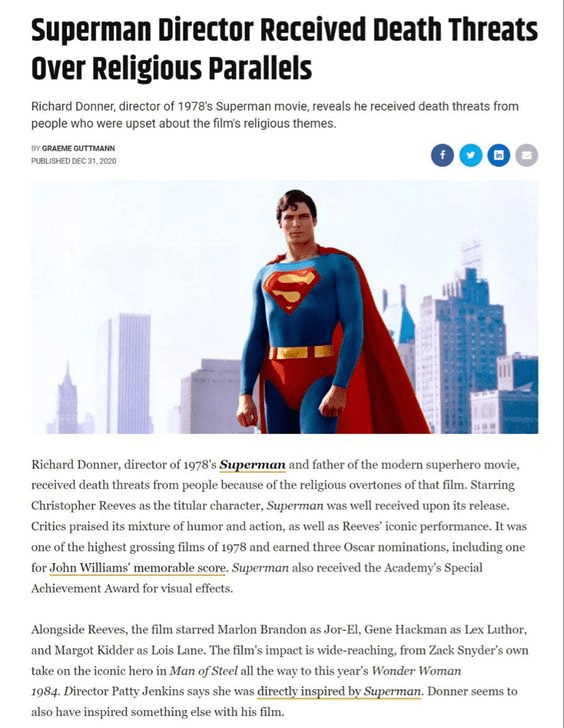
While modern viewers may look back on Donner’s Superman with rose-tinted glasses, it was not universally loved in its time. Amidst Donner’s releases, parents were burning comics and books for allegedly violent, anti-Christian, or communist messages. I tackle the changes this brought to comic books in Book 2: Comic Accuracy. The masses were as unhinged then as they are now, even without Twitter. Many critics enjoyed Donner’s film, and in the ensuing years, the duology’s cumulative score on websites that didn’t exist at the time has become mostly positive, but that didn’t save the cast or director from the wrath of DC fans.
In modern assessments of Donner’s work, critics wrongly associate the seemingly corny quality of the 1978 movie with an intentionally campy flick. This is despite the fact that the movie was sold on cutting-edge visual effects and tangible realism that would make you believe that Superman could really fly; that was the tagline for the film after all. The movie was attempting to break barriers and set a new standard in VFX. People incorrectly look back on it and say that modern movies should replicate the “inherent silliness” of the character, when that’s the exact opposite of what Donner and Reeve were aiming for with their movies. Even Reeve’s Superman costume was made with cutting-edge variants of nylon and spandex that wouldn’t become easily accessible textiles until the workout craze of the mid-1980s. Every detail of Donner’s filmography was meticulously planned to create a hybrid sense of realism and otherworldly visuals in Superman. What some suggest for Superman would be as if fans demanded that Star Trek only ever give the crew cotton shirts and cheap sets to “maintain the tone of the original”. That’s a very reductive perspective that ignores the context within which these stories were created.
Back in the cocaine fueled 1970s and 1980s, comic books were looked down upon by Hollywood. Donner’s first Superman movie had to escape the intentional camp of the Adam West Batman series that had dominated TV screens. Most people at the studio, save for Christopher Reeve himself, didn’t care much about the comic books. What the studio cared about was making a profitable movie. I’d say that for the budget and technology of the era, they knocked it out of the park. Aside from George Lucas and his original Star Wars trilogy, the debut of Star Trek’s motion pictures, or Spielberg’s JAWS, no franchise quite moved the needle for special effects blockbusters like Superman did. Children around the world truly believed that Superman was real and that maybe there was something super within all of us.
Unfortunately, the studio didn’t see a modern reinterpretation of the world’s first superhero. What WB saw were the middling reviews and complaints from parents that Superman had too much religious symbolism, that Superman seeing Lois’ panties with his X-ray vision was inappropriate for families, and that Lois having a smoking habit was too gritty and edgy. These were the issues that fickle critics and parents of the 1970s voiced. The sexual relationship of Lois and Clark before marriage was yet another point of contention that made the films “too adult” for kids of the time. That “universally loved” nostalgic film was the source of as much discord amongst viewers as any modern hero flick.
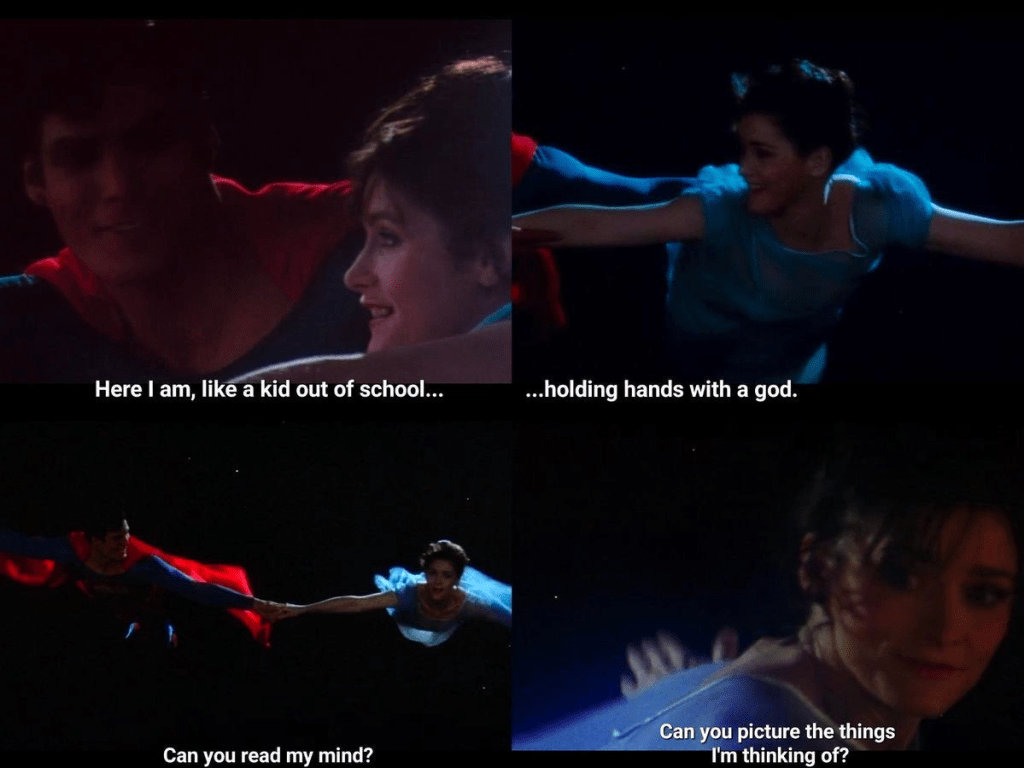
The scene that gave Donner the most angry fan mail was when he compared Superman to God. Specifically, a scene with Lois narrating to herself that she was flying in the sky with a God. This upset people for some reason. Presumably, the same reason it upsets their children and grandchildren when watching modern superhero films. In an interview with The Telegraph, Richard Donner recounted one of the letters he received from an angry fan.
“They threatened my life. One woman wrote a letter saying how dare I compare Brando to God and Christopher Reeve to Jesus. She said my blood would run in the streets. I guess you make a good movie, somebody takes it as a reality.”
Donner was replaced partway through filming Superman II with Richard Lester and Sidney J. Furie leading Superman into goofy exploits across subsequent sequels. Those goofy follow-ups saw flaccid reviews and smaller returns at the box office, despite catering to the complaints of vocal DC fans. The people who threatened and harassed Donner for his version of Superman never showed up at these new movies, or if they did, they represented a significantly smaller portion of the paying audience than WB had assumed. In 2006, Richard Donner’s cut of Superman II was released, devoid of a theatrical run, but found considerable acclaim on the VHS and DVD market as a sleeper hit. I feel like I shouldn’t have to point out how this mirrors another WB director’s treatment within DC, but I’m sure some readers will be obtuse about it. The truth is that Snyder and Cavill faced the same studio struggles that Donner and Reeve faced 35 years earlier. The cycle of the Warnerboros continues.
While some today define the Donner/Lester Superman as a goofball with no worries, Superman actor Christopher Reeve had become increasingly frustrated with the slapstick tone of the later films, and when offered a chance to co-star alongside Supergirl in her debut film, he candidly declined. After stating that he found it “a bore to watch somebody be a clutz all of the time,” Reeve went out of his way to let the world know how important it is to treat the Superman character with care and prestige, not as a simple gag to laugh at on the big screen:
“It’s very hard for me to be silly about Superman, because I’ve seen firsthand how he actually transforms people’s lives. I have seen children with brain tumors who wanted, as their last request, to talk to me, and have gone to their graves with a peace brought on by knowing that their belief in this kind of character is intact. I’ve seen that Superman really matters. It’s not the tongue-in-cheek cartoon character they’re connecting with; they’re connecting with something very basic: the ability to overcome obstacles, the ability to persevere, the ability to understand difficulty and to turn your back to it.”
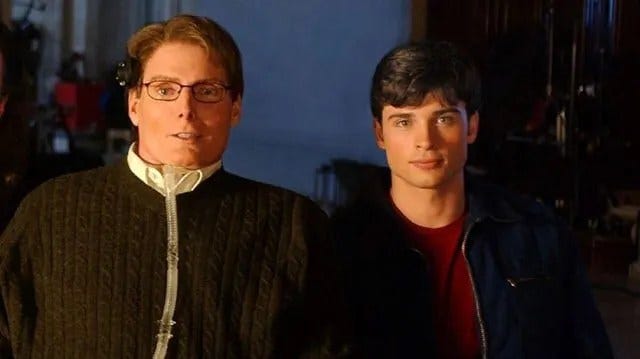
Online individuals of a certain age demographic often demand a version of Clark Kent that acts like a bumbling idiot because they think that’s the “true” way to depict the fictional character. What they fail to realize, aside from the fact that fictional characters can be whatever the writer wants them to be, is that neither Richard Donner nor Christopher Reeve ever wanted Superman to be viewed as a stumbling oaf. Even on the CW’s Smallville series, Clark Kent was portrayed as a capable young man on the cusp of becoming a great hero. Christopher Reeve adored the Smallville series, and when he made his cameos on the show, he stayed on set as long as his nurse would allow him to. According to Tom Welling, Christopher Reeve heaped praises upon the show and was proud of what the cast and crew were doing with their reinterpretation of the character for a modern audience. Reeve maintained an open mind, unlike many of his fans and studio executives. It’s a shame that a kind man and an icon for hope has been twisted into a cudgel against those who find joy in new media. Yet the Warnerboros cycle of self-destruction was not isolated to Reeve’s Superman.
The next part of the Warnerboros chapter will go up shortly.